Product Comparison

Changing AA Batteries Several Times a Year? This Jiangsu Factory Makes Rechargeable Lithium Batteries That Last 1000 Cycles

2026-10-04
JYOVEX
Changing AA Batteries Several Times a Year? This Jiangsu Factory Makes Rechargeable Lithium Batteries That Last 1000 Cycles

Three Chronic Problems of Disposable Batteries

How many times a year do you change batteries for your TV remote, kids' toys, or smart door lock? Most people can't answer. When the remote stops working, you dig through a drawer for two replacements; when the toy slows down, you swap another set. Over a year, you spend quite a bit on batteries, and even more end up in the trash.

The first problem is leakage. After sitting for a while, alkaline batteries can seep liquid from the bottom, corroding device contacts and circuit boards. A toy worth hundreds of yuan could be ruined by a few yuan worth of leaking batteries.

The second problem is voltage drop. Halfway through an alkaline battery's life, voltage drops below 1.5V. Smart locks are voltage-sensitive and may simply stop working when power is low, locking you outside. Electric toys also slow down within days of a fresh battery change.

The third problem is frequent replacement. Power-hungry devices like door locks, toys, electric toothbrushes, and shavers need multiple rounds of battery changes per year. Over time, you may spend more on disposable batteries than on the devices themselves.

Rechargeable Lithium Batteries Solve All Three Problems

JYOVEX's 1.5V constant-voltage lithium batteries take a constant-voltage approach. Built-in step-down management circuits keep output voltage stable at around 1.5V from start to finish — no "getting weaker over time." Smart locks won't suddenly fail due to voltage drop, and electric toys maintain consistent speed.

Charging is simple too. The batteries have built-in Type-C charging ports — just use your phone charging cable, no need to buy a dedicated charger. Both AA and AAA sizes support this method.

In terms of cycle life, AA and AAA lithium batteries can be recharged over 1000 times. At once a week, that's nearly 20 years of use. Capacity is rated in mWh — AA batteries cover 2400mWh to 4070mWh across multiple tiers, AAA batteries cover 600mWh to 1100mWh, allowing you to choose based on device power consumption.

About This Factory

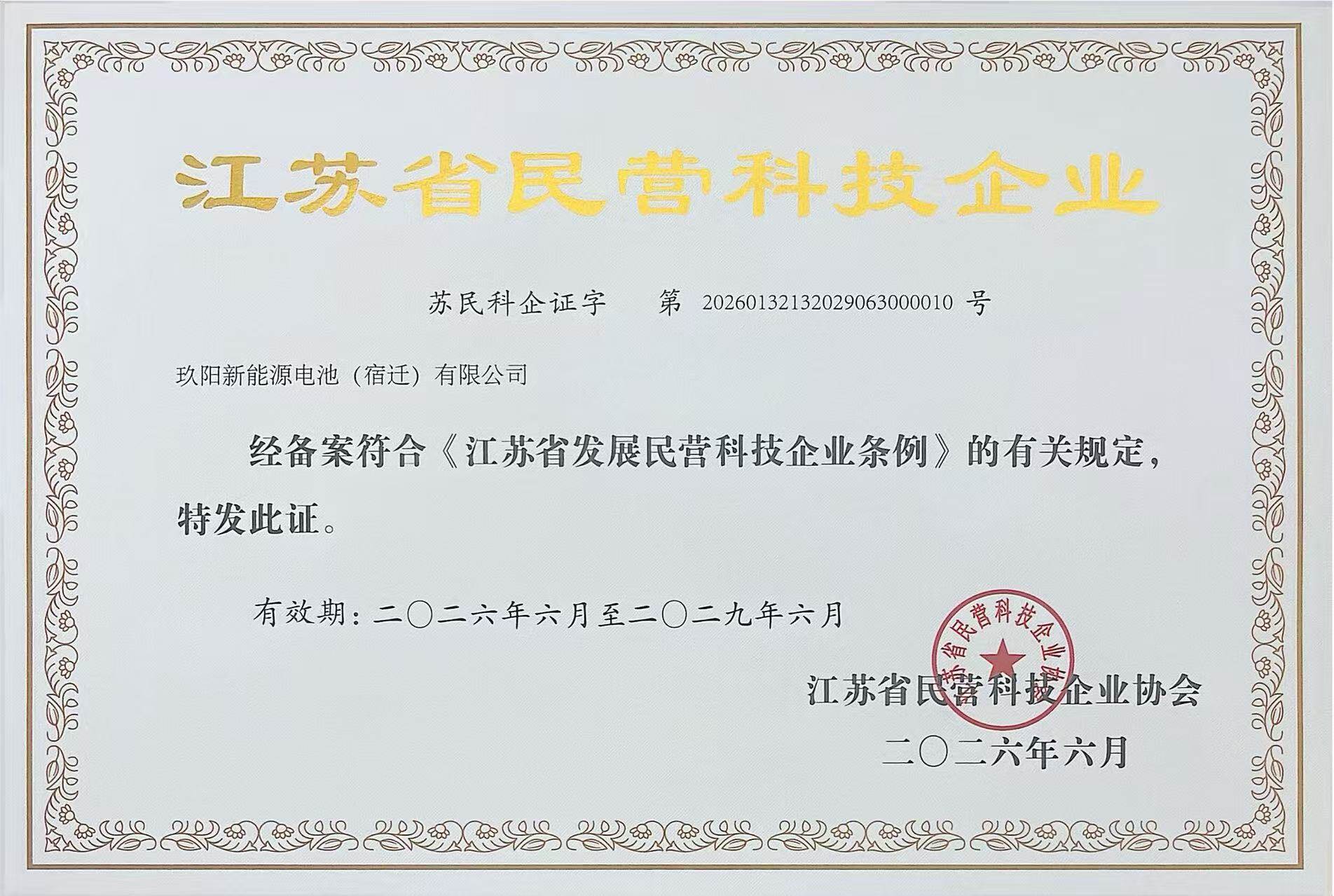
Jiuyang New Energy Battery (Suqian) Co., Ltd. was established in October 2024 in Suqian, Jiangsu, backed by over 20 years of battery R&D and manufacturing experience from its Shenzhen parent company. The factory was recently recognized as a Jiangsu Province Private Science and Technology Enterprise.

Monthly production capacity reaches 3.5 million cells. Products have passed multiple international certifications including IEC62133, CE/CB, UN38.3, UL2054, and obtained domestic 3C certification. Main applications include smart locks, remotes, electric toothbrushes, shavers, flashlights, blood pressure monitors, and toys.

Lithium Batteries Aren't for Everything

To be honest, lithium batteries aren't for everything. For low-current devices like wall clocks and thermometers, alkaline batteries are actually more cost-effective — the choice depends on device power consumption. But if you have several "battery-eating" devices at home and are tired of constantly replacing disposables, rechargeable lithium batteries are worth trying.

Tags:Alkaline BatteryLithium BatteryRechargeableAA Battery

Need Battery Selection Advice?

Our technical team can provide professional battery selection solutions and OEM/ODM customization services based on your device requirements.

Free Samples
3-5 Day Sampling
3.5M Cells/Month
Get Quote & Samples

Related Articles

Product Comparison

AA vs AAA Lithium Battery: Comprehensive Comparison of Capacity, Size and Applications

AA and AAA are the two most commonly used battery specifications. This article provides a comprehensive comparison from dimensions such as capacity, size, weight, applicable devices, and application scenarios.

Product Comparison

USB Direct Charge vs Dedicated Charger: Analysis of Advantages and Disadvantages

Type-C direct charge and dedicated charger are two charging methods for 1.5V lithium batteries. This article analyzes the advantages and disadvantages of both methods.

Product Comparison

1.5V Lithium vs Alkaline vs NiMH: Comprehensive Comparison of Three Battery Technologies

Comprehensively compare the performance differences of 1.5V lithium batteries, alkaline batteries and NiMH batteries from multiple dimensions.