
Application Cases
5 Major Application Scenarios of 1.5V Lithium Batteries in Smart Homes
Smart locks, security sensors, smart meters, smart speakers, curtain motors - analysis of 5 major application scenarios in the smart home field.
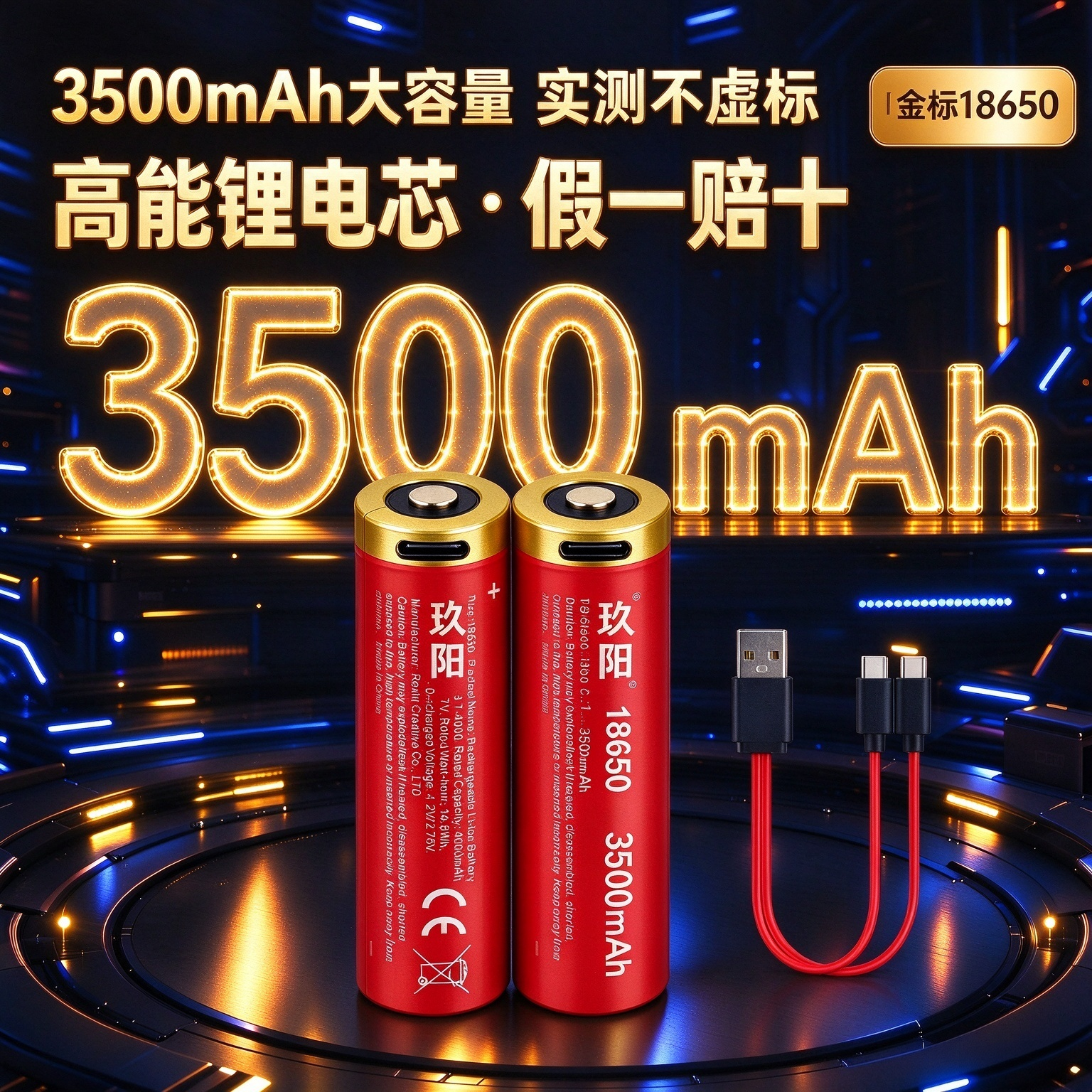
Power tools and industrial equipment have significantly different power consumption characteristics. Light-load tools such as handheld electric screwdrivers and small grinders typically operate at 5A to 15A, and a 3500mAh battery can support 30 minutes to 1 hour of continuous operation. This runtime range perfectly covers the single-task duration of most repair and assembly scenarios, eliminating the need for mid-task battery changes.
Instrument-type equipment has a different power consumption structure. Multimeters, rangefinders, and thermal imagers typically draw 0.5A to 2A, and the 3500mAh capacity reserve can support several work shifts of continuous use. For industrial inspection tasks requiring long-duration data collection, this runtime surplus directly reduces on-site battery swap frequency.
Walkie-talkies and industrial IoT terminals are low-power, long-standby devices. Standby current consumption is at the milliamp level, and peak transmit current typically does not exceed 3A. The 3500mAh capacity translates to several days of standby time in such devices, meeting the "one charge, multiple uses" requirement in shift-based scenarios.
The unit purchase price of a battery is only part of the usage cost. Taking a power tool with one daily charge-discharge cycle as an example, 800 cycles means approximately 26 months of usage. Compared to a 500-cycle same-capacity solution that needs replacement after about 17 months, the former reduces battery purchases by approximately 35% over its lifecycle.
For equipment manufacturers, this difference affects after-sales costs and brand reputation. When the配套 battery lifespan approaches or exceeds the equipment's wear-part replacement cycle, end users' reliability assessment of the overall equipment improves significantly. The 800-cycle metric gives the 18650 Type-C direct charge battery economic viability matching equipment lifecycle in the power tool segment.
Industrial equipment batch deployment scenarios are even more cost-sensitive. In a warehouse project with 200 handheld terminals, extending battery replacement frequency from 17 to 26 months results in considerable savings in battery procurement and labor replacement costs over three years. Every improvement in cycle life is amplified into quantifiable financial returns in large-scale deployments.
Traditional 18650 battery charging management relies on dedicated chargers or built-in device charging boards. Dedicated chargers increase accessory variety and warehouse management complexity, while built-in charging boards are constrained by device internal space and thermal design. The Type-C direct charge solution integrates the charging port into the battery body, allowing users to charge directly with standard Type-C cables and adapters.
This change brings two efficiency improvements in industrial scenarios. First, charging facility unification: factories, construction sites, and warehouses can use the same specification of charging adapter for different device batteries, reducing dedicated charger procurement and maintenance. Second, emergency charging flexibility: on-site personnel can borrow phone charging cables or car chargers to top up backup batteries, shortening downtime caused by battery depletion.
For OEM customers, the Type-C direct charge solution also simplifies device charging port design. The device body doesn't need a dedicated charging port, the battery compartment has more structural design freedom, and the difficulty of implementing waterproof and dustproof treatment is reduced accordingly.
The combination of 3500mAh and 800 cycles is not suitable for all power tools and industrial equipment. High-power impact tools (such as large electric hammers and angle grinders) can have peak currents exceeding 30A, and the discharge rate requirements exceed the design range of conventional 18650 cells. These scenarios are better suited for 21700 specifications or dedicated power battery packs.
The adaptation range focuses on medium-power, medium-to-high frequency device types: handheld electric screwdrivers and wrenches, small cutting and grinding tools, industrial inspection instruments, walkie-talkies and positioning terminals, and portable lighting equipment. These devices share common characteristics: operating current within the battery's reasonable discharge range, usage frequency high enough to require attention to cycle life, and clear user demand for charging convenience.
Our parameter settings for the 18650 Type-C direct charge product line are based on the intersection of the above scenario requirements. The 3500mAh capacity covers the runtime needs of mainstream medium-power devices, 800+ cycle life matches the equipment usage cycle, and the Type-C interface unifies charging management standards. For equipment manufacturers with OEM or ODM needs, we provide full-process support from selection consulting to sample development, with monthly capacity of 3.5 million cells ensuring batch delivery and 24-hour rapid response shortening project cycles.
Our technical team can provide professional battery selection solutions and OEM/ODM customization services based on your device requirements.
Smart locks, security sensors, smart meters, smart speakers, curtain motors - analysis of 5 major application scenarios in the smart home field.
Outdoor lighting has extremely high requirements for battery weather resistance, low temperature performance, and battery life.
Industrial IoT devices require batteries with long-term low power consumption, wide temperature operation, and communication-grade stability.